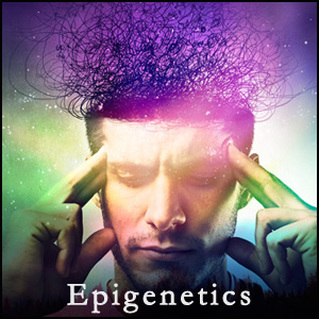
Epigenetics:
Epigenetics is essentially the study of the "behavior" of our genes. This behavior refers to the changes that occur in genes and how they act due to their environment. Just like you would react to stimulus in your environment, such as weather, other people, emotions etc, your body at the sub-atomic level (genetic code level) reacts to its environment much in the same way.
An example of this might be a person who suddenly goes into remission from cancer with no medical explanation. This type of behavior in the body is becoming more common everyday. The reason for this is the ability to positively and confidently tap into the mind and engage in awareness. This awareness creates either a hospitable or inhospitable environment for your body depending on your thoughts and emotions.
Have you ever known someone who is sick all the time? One who worries for years about getting a terrible disease only to have their predictions come true. Or the opposite type of person, who is so "busy" that they cannot afford to get sick… and they never do. The bottom line is that you can greatly effect your health either way just by how you think. Constant negativity, distraught emotions, anger and irritability are all a recipe for poor health and an unwanted lifestyle. People that live like this often perpetuate a cascade of situations that create a perfect environment for things to go wrong – physically and emotionally, which ultimately becomes a never ending cycle. Because this type of behavior usually accumulates over time, the person is unaware that they are creating this within themselves and often chalk it up to "bad luck", or place the blame on external situations and people.
There are many ways to help reverse this type of behavior. Ultimately you will want get to a better mental place. This can be done through altering relationships, meditation, and taking a more engaged approach in the way you manage the different aspects of your life. Discarding all victim mentalities and assuming responsibility for every action in your life – even when you do not think you did anything wrong in certain situations, puts you in a place to take better care of yourself. It puts you in a place of action rather than reaction. This approach will differ from person to person since everyone has a unique set of circumstances, however, it is the baseline of how all self help techniques work from. Self management is key to a healthy and happy life.
Below are more links on Epigenetics, some leaning toward the hard science and others toward the philosophy. Please enjoy.
Epigenetics is essentially the study of the "behavior" of our genes. This behavior refers to the changes that occur in genes and how they act due to their environment. Just like you would react to stimulus in your environment, such as weather, other people, emotions etc, your body at the sub-atomic level (genetic code level) reacts to its environment much in the same way.
An example of this might be a person who suddenly goes into remission from cancer with no medical explanation. This type of behavior in the body is becoming more common everyday. The reason for this is the ability to positively and confidently tap into the mind and engage in awareness. This awareness creates either a hospitable or inhospitable environment for your body depending on your thoughts and emotions.
Have you ever known someone who is sick all the time? One who worries for years about getting a terrible disease only to have their predictions come true. Or the opposite type of person, who is so "busy" that they cannot afford to get sick… and they never do. The bottom line is that you can greatly effect your health either way just by how you think. Constant negativity, distraught emotions, anger and irritability are all a recipe for poor health and an unwanted lifestyle. People that live like this often perpetuate a cascade of situations that create a perfect environment for things to go wrong – physically and emotionally, which ultimately becomes a never ending cycle. Because this type of behavior usually accumulates over time, the person is unaware that they are creating this within themselves and often chalk it up to "bad luck", or place the blame on external situations and people.
There are many ways to help reverse this type of behavior. Ultimately you will want get to a better mental place. This can be done through altering relationships, meditation, and taking a more engaged approach in the way you manage the different aspects of your life. Discarding all victim mentalities and assuming responsibility for every action in your life – even when you do not think you did anything wrong in certain situations, puts you in a place to take better care of yourself. It puts you in a place of action rather than reaction. This approach will differ from person to person since everyone has a unique set of circumstances, however, it is the baseline of how all self help techniques work from. Self management is key to a healthy and happy life.
Below are more links on Epigenetics, some leaning toward the hard science and others toward the philosophy. Please enjoy.
- Epigenetics: The science of Human Empowerment - Bruce Lipton, Ph.D. (Video)
- How Our Thoughts Can Make Us Healthy or Sick - (Article with Videos)
- What is Epigenetics?
- Epigenetics (Video)
- Bruce Lipton - Interview by Iain McNay (Video)
- Epigenetics and Imprinted Genes
- Epigenetics on Nova (Video)
- The New Biology - (Video)
- German New Medicine - (Video)
- Epigenetics - How Does It Work? - (Video)
- Epigenetics and Spontaneous Remission
- Bruce Lipton Spontaneous Evolution - (Video)
- Beyond Nature or Nuture
- On epigenetics (part I) - On epigenetics (part II) - (Videos)
- Epigenetics in NOVA SCIENCE - (Video)
- Epigenetics: How You Can Change Your Genes And Change Your Life
- Genetic Changes Carry Trauma’s Effects Across the Generations
-
- How Our Thoughts Can Make Us Healthy or Sick - (Article with Videos)
- What is Epigenetics?
- Epigenetics (Video)
- Bruce Lipton - Interview by Iain McNay (Video)
- Epigenetics and Imprinted Genes
- Epigenetics on Nova (Video)
- The New Biology - (Video)
- German New Medicine - (Video)
- Epigenetics - How Does It Work? - (Video)
- Epigenetics and Spontaneous Remission
- Bruce Lipton Spontaneous Evolution - (Video)
- Beyond Nature or Nuture
- On epigenetics (part I) - On epigenetics (part II) - (Videos)
- Epigenetics in NOVA SCIENCE - (Video)
- Epigenetics: How You Can Change Your Genes And Change Your Life
- Genetic Changes Carry Trauma’s Effects Across the Generations
-