Alchemy: What is Alchemy?
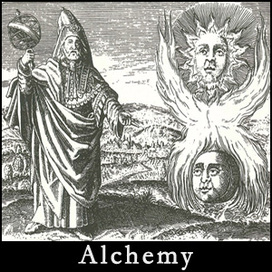
Alchemy, as defined by Merriam-Webster, is “the medieval chemical science and speculative philosophy whose aims were the transmutation of base metals into gold, the discovery of a universal cure for diseases, and the discovery of a means of indefinitely prolonging life.” While this definition captures the historical ambition of alchemists, I see it as only the surface of a much deeper and more enduring idea.
Alchemy has existed for centuries, tracing back to ancient Greek thought and the teachings of philosophers like Aristotle. At its core, it was never just about turning lead into gold. It was an exploration of nature itself, both the external world and the internal human experience. The alchemists observed patterns, cycles, and transformations in matter, and through those observations, they developed a philosophy that extended far beyond early chemistry.
In today’s world, alchemy no longer holds the same literal or scientific weight it once did, yet its symbolic meaning remains powerful. To me, alchemy represents transformation in its purest form. Change is not only inevitable; it is fundamental to existence. Everything around us, from the physical world to our thoughts and emotions, is in a constant state of motion and evolution. Modern science supports this idea just as strongly as ancient philosophy once did.
What we now often call “spiritual alchemy” reflects this timeless concept in a more personal way. Rather than focusing on metals and material substances, spiritual alchemy is about inner transformation. It is the process of refining the self, turning confusion into clarity, struggle into strength, and experience into understanding. In many ways, it is something most people engage in, whether they realize it or not.
This process of inner purification can take many forms. It may happen through education, where knowledge reshapes our perspective. It can emerge through self-reflection, where we confront and better understand our own thoughts and behaviors. Others may find it through structured practices such as philosophy, religion, meditation, or various metaphysical disciplines. Regardless of the path, the underlying goal is similar: growth, balance, and a deeper connection to both ourselves and the world around us.
I believe that one of the most important aspects of alchemy is its emphasis on awareness. Transformation does not happen by accident—it requires attention, intention, and effort. Just as ancient alchemists carefully observed their materials, we must observe ourselves. By doing so, we begin to recognize patterns, habits, and opportunities for change that might otherwise go unnoticed.
In the modern context, alchemy serves as a powerful metaphor for personal development. It reminds me that even the most difficult experiences can be catalysts for growth. What may seem like “base” aspects of life, challenges, failures, uncertainty, can, through reflection and persistence, be transformed into something valuable.
Ultimately, alchemy is less about changing the external world and more about transforming how we engage with it. It is a philosophy that bridges the ancient and the modern, the scientific and the spiritual. While its methods and language have evolved over time, its core message remains the same: transformation is always possible, and it begins within.
Alchemy, as defined by Merriam-Webster, is “the medieval chemical science and speculative philosophy whose aims were the transmutation of base metals into gold, the discovery of a universal cure for diseases, and the discovery of a means of indefinitely prolonging life.” While this definition captures the historical ambition of alchemists, I see it as only the surface of a much deeper and more enduring idea.
Alchemy has existed for centuries, tracing back to ancient Greek thought and the teachings of philosophers like Aristotle. At its core, it was never just about turning lead into gold. It was an exploration of nature itself, both the external world and the internal human experience. The alchemists observed patterns, cycles, and transformations in matter, and through those observations, they developed a philosophy that extended far beyond early chemistry.
In today’s world, alchemy no longer holds the same literal or scientific weight it once did, yet its symbolic meaning remains powerful. To me, alchemy represents transformation in its purest form. Change is not only inevitable; it is fundamental to existence. Everything around us, from the physical world to our thoughts and emotions, is in a constant state of motion and evolution. Modern science supports this idea just as strongly as ancient philosophy once did.
What we now often call “spiritual alchemy” reflects this timeless concept in a more personal way. Rather than focusing on metals and material substances, spiritual alchemy is about inner transformation. It is the process of refining the self, turning confusion into clarity, struggle into strength, and experience into understanding. In many ways, it is something most people engage in, whether they realize it or not.
This process of inner purification can take many forms. It may happen through education, where knowledge reshapes our perspective. It can emerge through self-reflection, where we confront and better understand our own thoughts and behaviors. Others may find it through structured practices such as philosophy, religion, meditation, or various metaphysical disciplines. Regardless of the path, the underlying goal is similar: growth, balance, and a deeper connection to both ourselves and the world around us.
I believe that one of the most important aspects of alchemy is its emphasis on awareness. Transformation does not happen by accident—it requires attention, intention, and effort. Just as ancient alchemists carefully observed their materials, we must observe ourselves. By doing so, we begin to recognize patterns, habits, and opportunities for change that might otherwise go unnoticed.
In the modern context, alchemy serves as a powerful metaphor for personal development. It reminds me that even the most difficult experiences can be catalysts for growth. What may seem like “base” aspects of life, challenges, failures, uncertainty, can, through reflection and persistence, be transformed into something valuable.
Ultimately, alchemy is less about changing the external world and more about transforming how we engage with it. It is a philosophy that bridges the ancient and the modern, the scientific and the spiritual. While its methods and language have evolved over time, its core message remains the same: transformation is always possible, and it begins within.
|
Additional Resources:
|